2010-11-13

How do I start trading Forex?

Dear Readers,

in the most recent comments, two interesting and fundamental questions have been raised. 

Vaguely: "It seems, that with only a small amount of money, I will never be able to make a huge profit." And: "My local bank charges me high fees for converting currency, this will eat up all my profit"

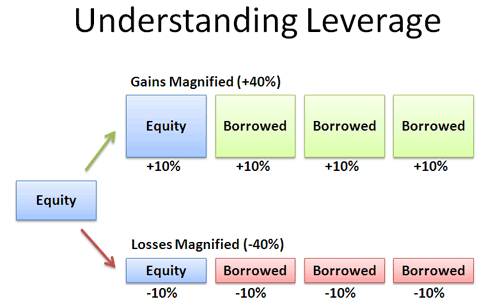
Let me give you a quick answer, before I continue in detail. In modern trading, something called "leverage" has become very popular, especially among small investors. In short, let us say you invest $1000 of your money, the leverage effect will enable you to invest $100.000, depending on the leverage ratio, here 1:100 of course. This has pros and cons, as your yields or losses rise enormously. For instance, I have set up a demo account with $100.000, and as I am trading with a leverage of 1:200, I can now buy currency for $20 million! 
(betterexplained.com)


This brings me to question number two - the fees. Whenever you buy stocks, currency or anything else traded at a "marketplace", you require a broker. Even if you "buy" your stocks at your local bank, a broker will be involved. Since many years online brokers have changed the world of trading. They offer all kinds of software, that lets you place realtime orders, automate processes, tools for analysis and of course much cheaper fees. E*trade, Scottrade, Wells Fargo, CMC Markets, Trade King, AFA FX are just a few. Many of them "make their money" through the spread of bid and ask price. "This is essentially the difference in price between the highest price that a buyer is willing to pay for an asset and the lowest price for which a seller is willing to sell it." [investopedia.com] So only little or no other fees will be charged.

Let us now take a closer look at how this works at the forex.

You select the pair of currencies with which you wish to make a Forex deal. You determine the volume (the amount of the deal). You deposit the "margin" (collateral needed to facilitate the deal. Usually - only a very small portion of the whole deal, say: 1% or 1:100).

When your Forex deal is running, you can monitor its status and check scenarios online, whenever you wish. You may change some terms in the deal, or close it. Ultimately, you remain in control, only you can decide when the time is right to cash in your profit!

Some Forex brokers will even let you determine a "take-profit" rate, with which the deal will close automatically for you, when and if such rate occurs in the market. Meaning: you do not have to stay near your computer waiting for the right moment, you can go to work, go shopping, or even got to the beach while the money is rolling in! On the other hand you should also set up a stop (or stop-loss) for your trade, in order to avoid high losses.

2010-11-11

Making profit from currency movements

As investor, your goal in Forex trading is to profit from foreign currency movements. In my first post about the FX market, I already mentioned, that currency trading is always done in currency pairs. For example, the exchange rate of EUR/USD on Aug 25th, 2003 was 1.0857. This number is also referred to as a "Forex rate" or just "rate" for short. If the you had bought 1000 euros on that date, he would have paid 1085.70 U.S. dollars. One year later, the Forex rate was 1.2083, which means that the value of the euro (the numerator of the EUR/USD ratio) increased in relation to the U.S. dollar. You could now sell the 1000 euros in order to receive 1208.30 dollars and make USD 122.60 profit.

(cross rates: 2010-11-11, 12:57 UTC, source: www.xe.com)


However, to know if the investor made a good investment, one needs to compare this investment option to alternative investments. At the very minimum, the return on investment (ROI) should be compared to the return on a "risk-free" investment. One example of a risk-free investment is long-term U.S. government bonds since there is practically no chance for a default, i.e. the U.S. government going bankrupt or being unable or unwilling to pay its debt obligation.

When trading currencies, trade only when you expect the currency you are buying to increase in value relative to the currency you are selling. If the currency you are buying does increase in value, you must sell back the other currency in order to lock in a profit. An open trade (also called an open position) is a trade in which a trader has bought or sold a particular currency pair and has not yet sold or bought back the equivalent amount to close the position.
However, it is estimated that anywhere from 70%-90% of the FX market is speculative. In other words, the person or institution that bought or sold the currency has no plan to actually take delivery of the currency in the end; rather, they were solely speculating on the movement of that particular currency.

2010-11-10

Demo account

This is just a little update, to let you know I have set up a demo account at AVA FX. I am using their AVA Autotrader software and started playing around a little with different automated strategies. The demo account comes along with EUR100.000,00 to experiment with. A little too much for my taste, as it is pretty unrealistic for me. However, you can decide how much of that money you want to invest, of course.


Up until now everything is running smooth. No mentionable losses. The selected strategies seem to work pretty restrictive and do not open many trades, which is a good sign in my opinion. A total of 9 trades made around €2,200 profit within the past 24 hrs. As you can see in the picture, I tried to keep the risk-level low.


I will keep you informed about the development.


2010-11-09

The foreign exchange market

FX - the FOREX market or currency market is the market where one currency is traded for another. It is one of the largest markets in the world.

Some of the participants in the FX are simply seeking to exchange a foreign currency for their own, like multinational corporations which have to pay wages and other expenses in different nations than they sell products in. Anyhow, a large part of the market is made up of currency traders, who speculate on movements in exchange rates, similar to others who speculate on the movements of stock prices.

(typical trading software)

Currency traders try to take advantage of even small fluctuations in exchange rates.
In the FX market there is little to no 'inside information'. Exchange rate fluctuations are usually caused by actual monetary flows as well as anticipations on global macroeconomic conditions. Significant news is released publicly so, at least in theory, everyone in the world receives the same news at the same time.

Currencies are traded against one another. Each pair of currencies thus constitutes an individual product and is traditionally noted XXX/YYY. For instance, EUR/USD is the price of the euro expressed in US dollars, as in 1 euro = 1.2045 dollar.
Unlike stocks and futures exchange, foreign exchange is indeed an interbank, over-the-counter (OTC) market which means there is no single universal exchange for specific currency pair.

The foreign exchange market operates 24 hours per day throughout the week between individuals with forex brokers, brokers with banks, and banks with banks. If the European session is ended the Asian session or US session will start, so all world currencies can be continually in trade. Traders can react to news when it breaks, rather than waiting for the market to open, as is the case with most other markets.
Average daily international foreign exchange trading volume was $1.89 trillion in April 2008 according to the BIS study.

Like any market there is a bid/offer spread (difference between buying price and selling price). On major currency crosses, the difference between the price at which a market maker will sell ("ask", or "offer") to a wholesale customer and the price at which the same market-maker will buy ("bid") from the same wholesale customer is minimal, usually only 1 or 2 pips. In the EUR/USD price of 1.4248 a pip would be the '8' at the end. So the bid/ask quote of EUR/USD might be 1.4248/1.4249.
This, of course, does not apply to retail customers. Most individual currency speculators will trade using a broker which will typically have a spread marked up to say 3-20 pips (so in our example 1.4247/1.4239 or 1.424/1.435). The broker will give their clients often huge amounts of margin, thereby facilitating clients spending more money on the bid/ask spread.

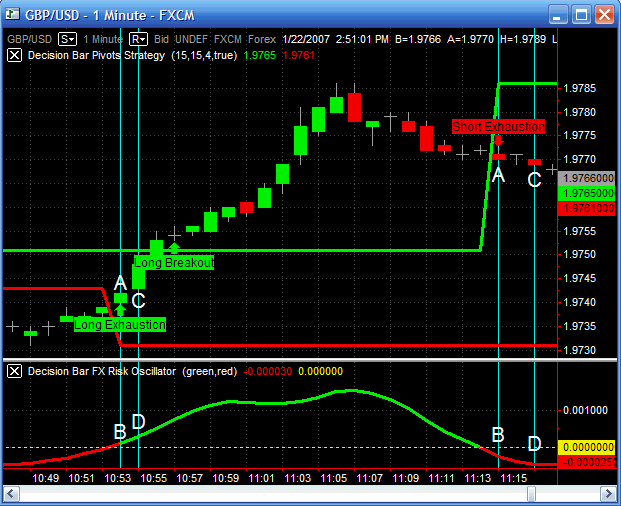
(1 minute chart displaying the fluctuation between GBP and USD)


The brokers are not regulated by the U.S. Securities and Exchange Commission (since they do not sell securities), so they are not bound by the same margin limits as stock brokerages. They do not typically charge margin interest, however since currency trades must be settled in 2 days, they will "resettle" open positions (again collecting the bid/ask spread).

Individual currency speculators can work during the day and trade in the evenings, taking advantage of the market's 24 hours trading day. 
Dear readers,


I would like to welcome you all to my new blog! In the following posts, I will put spotlight on the worldwide trading markets, review online trading platforms and give you some basic information about the financial glossary.


Of course, everyone is welcome to share their thoughts and experiences, so that all of us can benefit from that.